Martes, Pebrero 24, 2015

REVIVAL ART: RENAISSANCE


Renaissance Art- (Rebirth/ Revive Art) sculpture, painting, literature, music and architecture produced during the 14th, 15th, and 16th centuries in Europe under the combined influences of an increased awareness of nature, a revival of classical learning, and a more individualistic view of man.

Subject Matter: 
- People
- Religion

Predominant Style:              
- Realism
- Naturalism
- Symbolism
-Idealism

Medium:
- Bronze
- Marble
- Canvas
- Wood
-Tempera
- Oil
- Fresco (Plaster)

The period immediately following the Middle Ages in Europe saw a great revival of interest in the classical learning and values of ancient Greece and Rome. Against a backdrop of political stability and growing prosperity, the development of new technologies–including the printing press, a new system of astronomy and the discovery and exploration of new continents–was accompanied by a flowering of philosophy, literature and especially art. 

The origins of Renaissance art can be traced to Italy in the late 13th and early 14th centuries. During this so-called “proto-Renaissance” period (1280-1400), Italian scholars and artists saw themselves as reawakening to the ideals and achievements of classical Roman culture. Writers such as Petrarch (1304-1374) and Giovanni Boccaccio (1313-1375) looked back to ancient Greece and Rome and sought to revive the languages, values and intellectual traditions of those cultures after the long period of stagnation that had followed the fall of the Roman Empire in the sixth century.

Arts flourished during the height of humanism and Renaissance in Italy. Notable artists in Italy include Leonardo da Vinci, Raphael Sanzio, Michelangelo Buonarroti, Donatello, Tintoretto, Bernini, Caravaggio and Titian. 
Leonardo Da Vinci

Rome is home to scientific geeks in the past. Leonardo da Vinci, apart from being consummate artist is also an advanced thinker (genius). He already had daring speculators on hydrology, meteorology, anatomy, and geology. Advances in astronomy and physics were pioneered by Guglielmo Marconi, Alessandro Volta and Galileo Galilei.


The Renaissance in Italy bought to the country noble ideas and great literary insights. The period of the High Renaissance produced men of highly exceptional genius and talents. 

My artwork skill influence to this era is the subject matter: Humans, Portrait, style: realism and idealism. The artworks of this 4th era is more detailed, realistic, and the famous artist are very amazing, very creative, and very wonderful artwork. 


In the picture below, this is the famous painter in High Renaissance: 
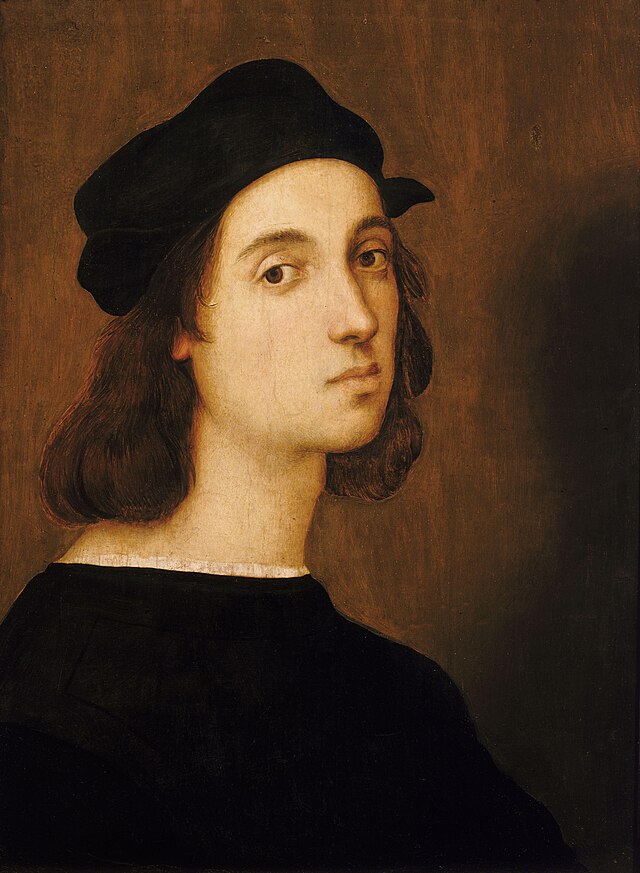
Raffaello Sanzio.jpg
Sanzio
Da Vinci
Buonarroti


Linggo, Enero 25, 2015

Christian Art


Christian art is a religious art which uses imagery and themes from Christianity. It is based in architecture of the churches, cathedrals, and basilica.
In Christian art, there are have Christian Periods: Early Christian, Byzantine, Early Middle Ages, Romanesque, and Gothic Art. In Early Christian Art, divided into two periods: The Period of Persecution (Christians had to worship in secret) and Period of Recognition (Christians started to building places to worship). Catacombs- is the underground burial place.

Catacombs

The most important churches in Early Christian is the "Old St. Peter's Basilica". 


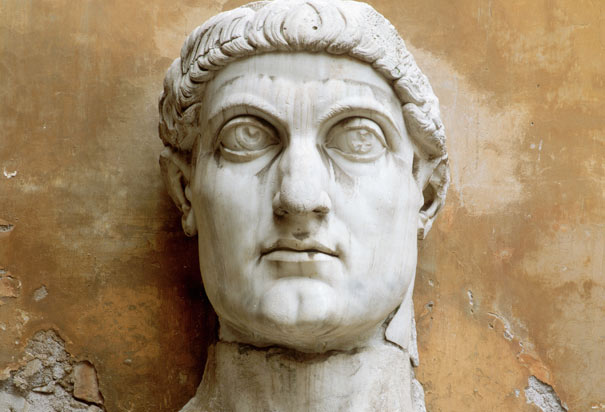
Constantine adopted Christianity as the faith of the Roman empire.
 
Byzantine  Art is comes from the city of Byzantium where Constantine ( a Roman Emperor) made his capital, Constantinople.

 
Constantine


In Byzantine Architecture, the most important example is the " San Vitale Ravena"( it is located on the Adriatic coast of Italy). It is built during Justinian's reign and one of the most elaborate buildings decorated in the byzantine style.
                                                                                                                                                                                                      
Basilica of San Vitale, Ravenna, Italy.jpg
San Vitale, Ravena


Hagia Sophia- Built for Emperor Justinian
(Anthemius of Trales and Isidorus of Miletus)- Church of Holy Wisdom.

Early Middle Ages

Many works of Christian art from the Early middle ages combine characteristics of the small carvings and metal work of these warrior tribes with the symbol of christian faith. 

A carpet page from the Lindisfarne Gospels (illuminated manuscript- hand- decorated pages of text).


There a few civilizations going on in Medieval times: The Carolingian Art (comes from the frankish empire in the period of roughly 120 years from about 780 to 900 during the reign of Charlemagne) and Ottonian Art (refers to the three rulers named Otto who stabilized the Holy Roman Empire the disuptions followig Charlemagnes death).

The most important example in architecture in Carolingian Art is the "Palatine Chapel of Charlemagne" and in Ottonian art is the "St. Michael's in Hildesheim"/


.
Gothic Period dates from the 12th and 13th century. It was a negative term first used by historians because it was believed that the barbaric Goths were responsible for the style of this period.

Romanesque refers to the art of Europe from approximately 1000 AD to the rise of the Gothic style in the 13th century, or later, depending on region.The preceding period is increasingly known as the Pre-Romanesque.

The architecture of churches, cathedrals, and basilica was so amazing and beautiful, internal or external.  


Linggo, Enero 18, 2015

Greek and Roman Art


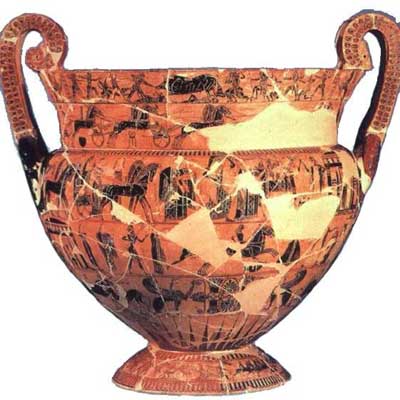
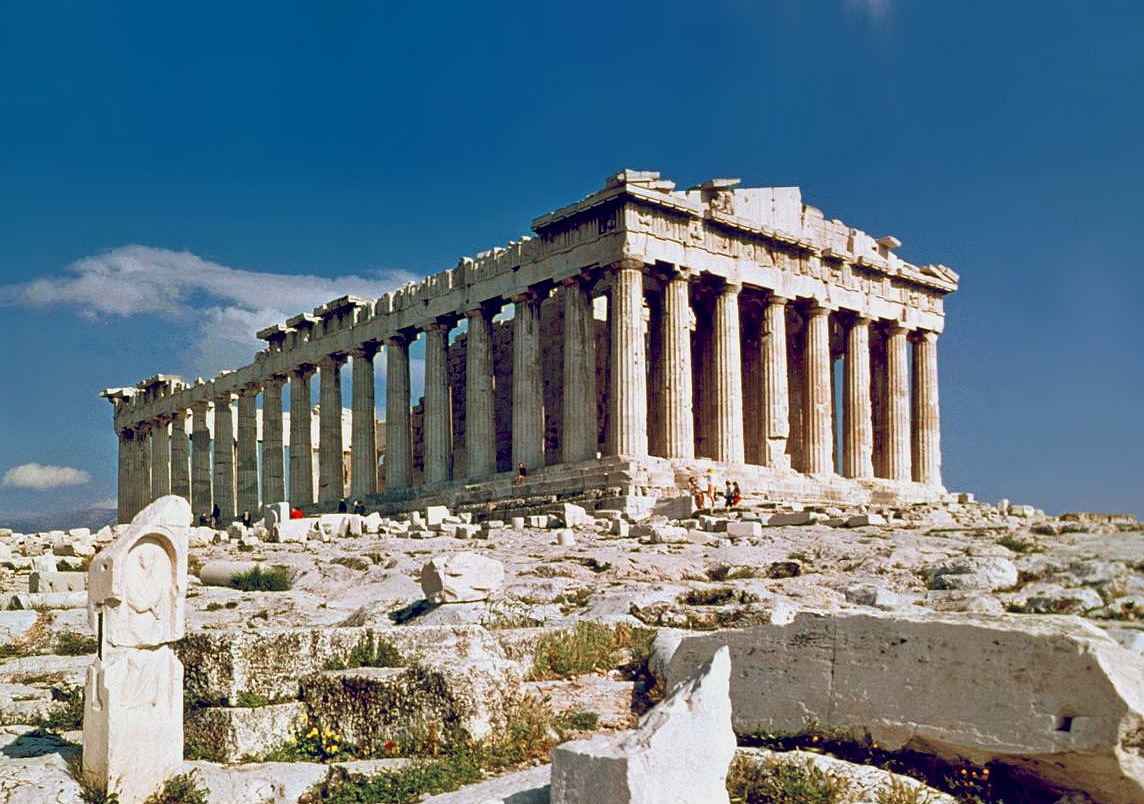
Classical Art is the artistic legacy of Greece and Rome with has influences almost all of Western Art. They show the importance of people & leaders and the importance of gods & Goddesses. The Religion and culture in Greek Art, the Greeks believed in living the perfect life. They believed that a variety of different Gods controlled different aspects of every person’s destiny on earth. They believed these gods acted in every human ways and had great respect and fear for them. Many architecture and works of art were created about different Gods and so on.  Many nice sculptures, vases and the architecture are there in Greek Art like the following:


Dipylon Vase

Women Working on a Loom


François Vase
The Falling Warrior and The Dying Warior

Diskobolus


The Parthenon
and many more.

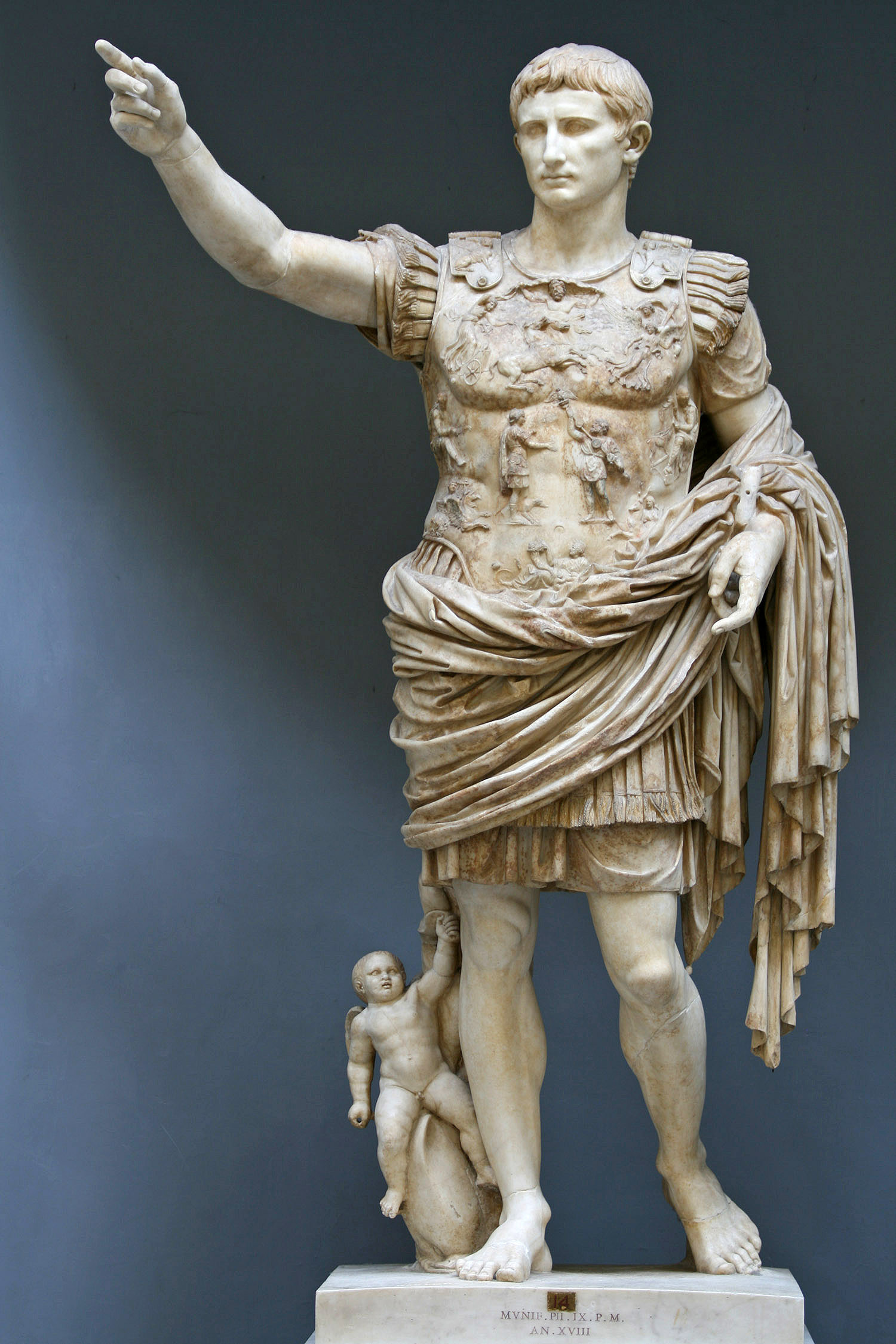
     Roman art combined needs, native talents, and styles, especially Greek. It was fashionable to own copies of Greek art. In Roman, the biggest contribution was the architecture. The span of their empire was vast, and examples of their architectural style can be seen all over Eastern Europe.
Roman art is less idealized and less religious than Greek art. It was heavily influenced by Greek art and it was more commemorative.

The purpose of Roman art is to create a record of Roman history and to celebrate and show off the power and might of the empire and emperor. 

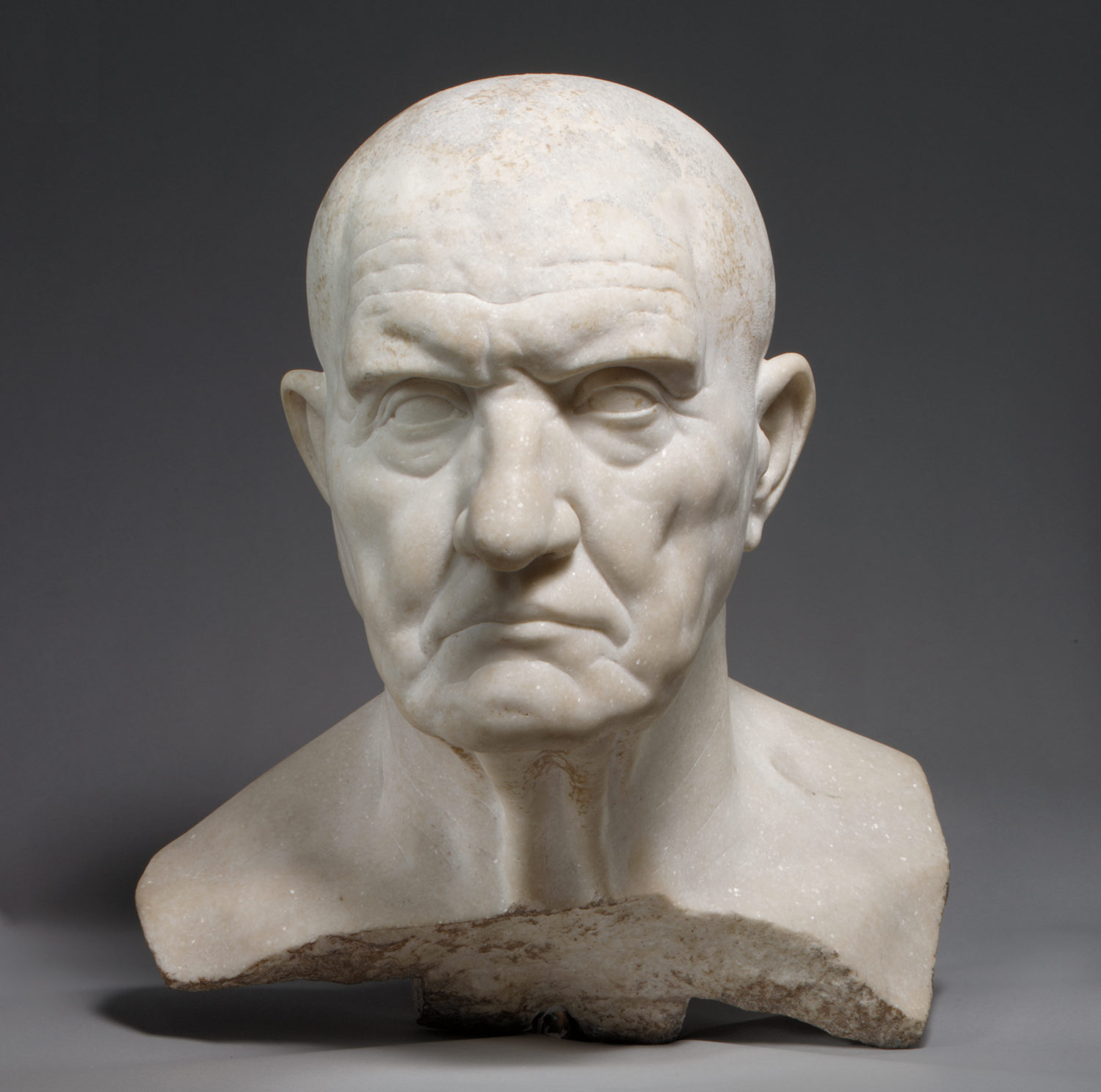
These are the works of the Roman Art:


Head of a Roman
Pont du Gard
Temple of Fortuna Virilis
The Colosseum


Augustus of Primaporta


Head of Constantine

and many more.

    For me, the most amazing is the sculpture in Greek and Rome because it is very unique, very realistic and idealism, and perfect. 

Sabado, Disyembre 27, 2014

Ancient Art

Artwork has and still remains a very important part of people’s lives. The visual and performing arts allow people to express their beliefs and feelings. Since most art expresses the feelings and beliefs of a person, the art also express much of their culture. Historians and students can learn from this artwork about a certain culture. Most prehistoric and ancient cultures do not have many written documents and without this artwork we would know very little to nothing about them. That is why artwork from any culture, especially Ancient ones is so important. India, Greece, Egypt, Rome, China, Mesopotamia, Israel and Persia have many types of ancient art with different styles although it is a painting, sculpture, architecture and etc. Animals, people, Gods and Goddesses are the subject matter of ancient art. They use stones, chalk, pigments, charcoal and etc. to make art like for example the “Cave Paintings”, they draw in stone cave using medium of art. These is the picture of cave paintings:

Paleolithic Cave Painting


Ancient art and the artist were admirable because how the artist do their artwork? (how they do that?) I can’t believe it! It is important because it allows us to have a glance of a long deceased culture. A memories.

Biyernes, Disyembre 5, 2014

IMPORTANT IN ART


For me the most important in visual elements is color because they are shown of artist’s emotions in making their artworks. We all live in a world where at some point, color will be a part of, and effect us in our everyday lives. This element gives life and comely to every work of art. To create light, shadow, and space in making artwork. They are the most attractive and the best part in making art. Different colors can create different situations for artwork. We can create the mood by selecting warm or cool colors that remind us of emotions that we want in our artwork. This is the powerful effect on our works and the impressions of the people or the viewer. They choose artist what colors that they use either warm or cool colors. There are different meaning of each color for example red is love, blue is wisdom, green is calm, yellow is joyful and many more.

The most important for me in principles of design is harmony because they combine all elements of art like lines, shape, texture, shape, value, color and motion to create artwork. They also called unity. There are the three methods of harmony, the repetition, proximity, and simplicity. If there have harmony in music, also there have harmony in arts. We can create harmony with color to help us build a particular relationship between the colors on the palette. When colors are harmonized the relationship that is established allows the colors to work together. By sharing something in common, they blend together creating harmony.  


I choose content in components of art because the artist shown their artwork using intellectual message. Content is what a piece of work is about or what is the subject matter. Content can also be the “essence” of the painting. It conveys a subject matter to portray or tell something to the viewer. It shows the significance, expression, meaning or significance of a work of art. Artist use different content in making their artworks. In one artwork, there are many symbols or message in art like for example of the artwork of Leonardo da Vinci’s “ Mona Lisa”, it is a portrait of a woman but there are many symbols in his artwork. “What you see, is what you understand”. 
Mona Lisa


http://www.taradesignspace.com/blog/2012/06/15/form-and-content-what-does-that-really-mean/.

Sabado, Nobyembre 29, 2014

Left Hand " Artistic Style"

Left hander is use the right side of the brain the most or is artistic? Is this true?  Did you know that the three renaissance great artists: Leonardo da Vinci, Raphael Sanzio, and Michelangelo Buonarroti are left hander? Yes, that’s true. Left hander like me is a well- informed in different arts but mostly, I focus in drawing. Drawing is my hobby since when I was 7 years old. I remember my previous drawing when I was a kid like a girl and a boy, a house, landscape like mountains and etc. I try and try to improve my drawings. When I was in 3rd Year High school I started to join in poster making contest. When I was in 4th Year High School, I elected as artist of Student- Teacher’s Organization. I thank God because I have a gifted hand/ talent.
What is my artistic style?
Previously I focus to draw “Anime” (are Japanese animated productions usually featuring hand-drawn or computer animation) but last week, I practice to draw “Portrait”. Here are some artworks that I created:

Lenore Quibael from MMA1-1
HB, 2B & 4B Pencil in A4 paper

HB, 2B & 4B Pencil in A4 paper

Source:


http://en.wikipedia.org/wiki/Anime 

Sabado, Nobyembre 22, 2014

Leonardo da Vinci: "Mona Lisa" and Vincent Willem van Gogh: "Starry Night"


Mona Lisa
Mona Lisa or ( La Joconde in French; La Gioconda in Italian ) art by Leonardo da Vinci and one of the finest examples of Renaissance painting and it is probably also the best known example of sfumato (is one of the four canonical painting modes of the Renaissance; use of fine shading), a painting technique partly responsible for her enigmatic smile. A painting presents a woman in half-body portrait, which has as a backdrop a distant landscape and which has been acclaimed as the best known, the most visited, the most written about, the most sung about, the most parodied work of art in the world. In dimensions, it is 77 cm × 53 cm (30 in × 21 in)and it is an oil rendition of Da Vinci using poplar wood. It is told that Da Vinci started the painting in 1503 and took about four years to complete, although art history books suppose that Da Vinci spent a few more years to perfect its creation. There are around 6 million people from all over the world every year who visit the Musée du Louvre in Paris, France (one of the world's largest museums and a historic monument) to see Leonardo da Vinci’s famous portrait, Mona Lisa. Who’s Mona Lisa? The painting, thought to be a portrait of Lisa del Giocondo (15 June 1479 – 15 July 1542 ), the wife of Francesco del Giocondo, was a member of the Gherardini family of Florence and Tuscany in Italy. Her name was given to Mona Lisa, her portrait commissioned by her husband and painted by Leonardo da Vinci during the Italian Renaissance. Little is known about Lisa's life. Born in Florence and married in her teens to a cloth and silk merchant who later became a local official, she was mother to five children and led what is thought to have been a comfortable and ordinary middle-class life. Lisa outlived her husband, who was considerably her senior. Centuries after Lisa's death, Mona Lisa became the world's most famous painting and took on a life separate from Lisa, the woman. Speculation by scholars and hobbyists made the work of art a globally recognized icon and an object of commercialization. In 2005, Lisa was definitively identified as the model for the Mona Lisa.

Leonardo da Vinci 
Who is Leonardo di ser Piero da Vinci? (15 April 1452 – 2 May 1519) he was an Italian polymath, painter, sculptor, architect, musician, mathematician, engineer, inventor, anatomist, geologist, cartographer, botanist, and writer. He is widely considered to be one of the greatest painters of all time and perhaps the most diversely talented person ever to have lived. His genius, perhaps more than that of any other figure, epitomized the Renaissance humanist ideal. He has often been described as the archetype of the Renaissance man, a man of "unquenchable curiosity" and "feverishly inventive imagination". According to art historian Helen Gardner, the scope and depth of his interests were without precedent and "his mind and personality seem to us superhuman, the man himself mysterious and remote". Marco Rosci states that while there is much speculation about Leonardo, his vision of the world is essentially logical rather than mysterious, and that the empirical methods he employed were unusual for his time. Leonardo is revered for his technological ingenuity. He conceptualized flying machines, a vehicle, concentrated, an adding machine, and the double hull, also outlining a rudimentary theory of plate tectonics. Relatively few of his designs were constructed or were even feasible during his lifetime, but some of his smaller inventions, such as an automated bobbin winder and a machine for testing the tensile strength of wire, entered the world of manufacturing unheralded. He made important discoveries in anatomy, civil engineering, optics, and hydrodynamics, but he did not publish his findings and they had no direct influence on later science.

Leonardo da Vinci was renowned as the inventive artistic genius long before he painted the Mona Lisa, and his fame drew wide attention to his art. His reputation as a genius was well- deserved. Leonardo lived his motto, “He is a poor pupil who does not surpass his masters” and is said to have surpassed not only his masters, but all his contemporaries in each of the many arts and disciplines to which he committed himself. He researched anatomy to perfect his art. His dissected animal and human cadavers to learn the muscle and skeletal structure and made copious drawings and notes. He studied perspective, the sky and atmosphere, and the way light falls in curved surfaces and, based on these studies, refined his painting methods. Although only a few paintings survive today, his work is still admired by experts. The Mona Lisa was one of his last paintings, all his skills is evident. Did you know that the original painting has a minor spot of damage near her left elbow. In 1956, for not known purpose, a man named Ugo Ungaza threw a stone at the painting and therefore creating the small damage. Mona Lisa artwork started to be so common because partially it created news when it was stolen from Louvre Museum in Paris by an employee in 1911 - in broad daylight. However it was recovered after about two years.


Musée du Louvre in Paris, France 

A minor spot of damage near her left elbow (1956)
 Vincent Willem van Gogh
 was a Post-Impressionist painter of Dutch origin whose work—notable for its rough beauty, emotional honesty, and bold color—had a far-reaching influence on 20th-century art. He began to draw as a child, and he continued to draw throughout the years that led up to his decision to become an artist. He did not begin painting until his late twenties, completing many of his best-known works during the last two years of his life. In just over a decade, he produced more than 2,100 artworks, consisting of 860 oil paintings and more than 1,300 watercolors, drawings, sketches, and prints. His work included self portraits, landscapes, still life’s, portraits as well as paintings of cypresses, wheat fields and sunflowers.
This is the famous artwork of Vincent, “The Starry Night”. It is an oil on canvas painting. Painted in June, 1889, it depicts the view (with the notable addition of an idealized village) from the east-facing window of his asylum room at Saint-Rémy-de-Provence, just before sunrise. It has been in the permanent collection of the Museum of Modern Art in New York City since 1941, acquired through the Lillie P. Bliss Bequest. It is Van Gogh's best-known painting and one of the most recognized monuments in the history of Western culture. Just as most people can tell you that Vincent Van Gogh was a famous Impressionist artist who painted Starry Night, many people also have heard about how Van Gogh was "crazy" and suffered with mental health issues throughout his life. The story of Van Gogh cutting off his ear after a fight with his friend, the French artist Paul Gauguin, is one of the most popular anecdotes in art history, and supposedly occurred in winter 1888, the year before the painting of Starry Night and not long before Van Gogh's death in 1890. Keeping with his reputation as a crazy artist, Van Gogh was committed to a mental health asylum in Arles after the ear incident with Gauguin. History has it that Van Gogh painted Starry Night while in the mental hospital, and that the landscape in the painting is the view Van Gogh had from his window.

(Source)

Book:
Readings from World Literatures. Great Books Publishing 2013